
Happy child playing basketball with adult

Child Welfare

We promote policies that support communities and families and prevent children from entering a child welfare system—including the juvenile justice system. When system-involvement is necessary, we aim to ensure that resources are available within communities so that families and children can get the help they need where they live and avoid unnecessary separation through foster care or juvenile justice involvement.

Through policy and advocacy, we strive to ensure that the child welfare and juvenile justice systems are informed by data, utilize best practices, provide culturally relevant services, and confront inequity. Many of our efforts are directed toward families and youth who most often experience the poorest outcomes, including people of color, older youth, expectant and parenting youth, and LGBTQ+ young people. We work to advance policies that allow all children impacted by system involvement to heal, grow, and succeed.
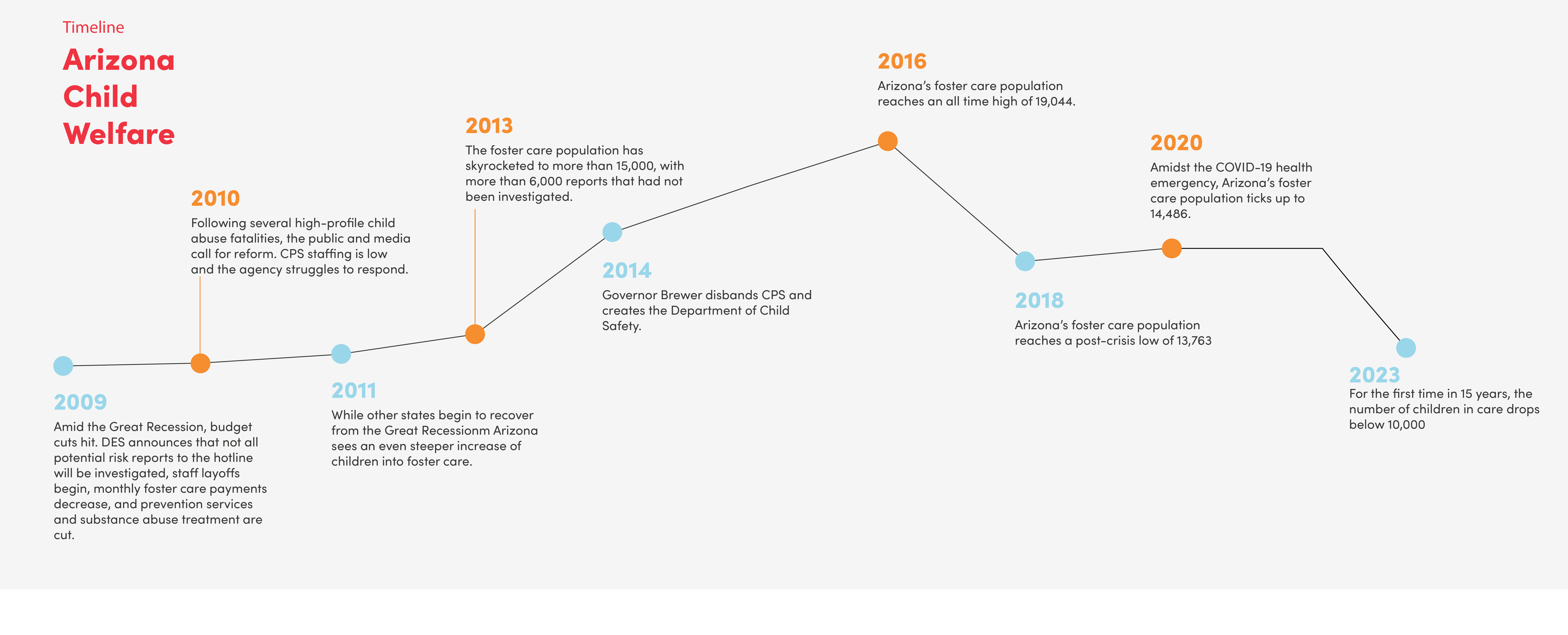
9,900

Children in foster care in Arizona.

48%

Of foster children in Arizona are placed with grandparents and other kin. This is higher than the national rate of 32%.

4x

In Arizona, Black children are 4 times more likely than White children to enter foster care.

2026 Legislative & Policy Priorities

Too many families face a crisis due to rising costs of food and transportation, housing insecurity, and lack of support to make ends meet. When families have access to concrete supports like Temporary Assistance for Needy Families (TANF), child care, and stable housing, reports of neglect and entries into foster care decrease.

In times when a child can no longer remain safely with parents, it is critical to support grandparents and other kinship care givers so they can afford to step in. When this is not possible, it is essential that children are placed in safe and nurturing homes, not institutions where they are less likely to thrive.

  1. STRENGTHEN PREVENTION EFFORTS by ensuring that poverty alone is addressed with concrete financial supports not family separation
  2. SUPPORT THE SAFETY OF CHILDREN IN FOSTER CARE BY REDUCING PLACEMENTS IN CONGREGATE CARE, creating safeguards for the youngest children who may be placed in group homes, and increasing placements with safe and nurturing kin and licensed foster families
  3. INCREASE FINANCIAL SUPPORT FOR KINSHIP CAREGIVERS, including by restoring child-only TANF for children living with kin outside of the foster care system to reduce Arizona’s over-reliance on congregate care
  4. STRENGTHEN THE STABILITY OF YOUTH WHO TRANSITION OUT OF FOSTER CARE by providing supportive services, including maintenance of SNAP
  5. ALLOCATE REVENUE TO PREVENT SNAP ENROLLMENT LOSS AMONG ELIGIBLE ARIZONANS, including IT infrastructure modernization and to address cost shifts created by federal law

Read the latest

Child Poverty Grows, Making Anti-Hunger Services Critical

At a time when key supports, including the country’s most effective hunger prevention programs, are at risk for children and families in Arizona, new data tells us just how critical essential services are for children in need. According to the supplemental poverty measure, child poverty in Arizona…

Supporting LGBTQ+ Youth in a Time of Change    

News

Group Homes – Our Take

Empowering Kinship Caregivers: A Caregiver Forum

News

Policy Solutions Can and Should Prevent Hunger and Homelessness Among Children and Youth