Type: News

It’s Called ‘Head Start’ for a Reason 

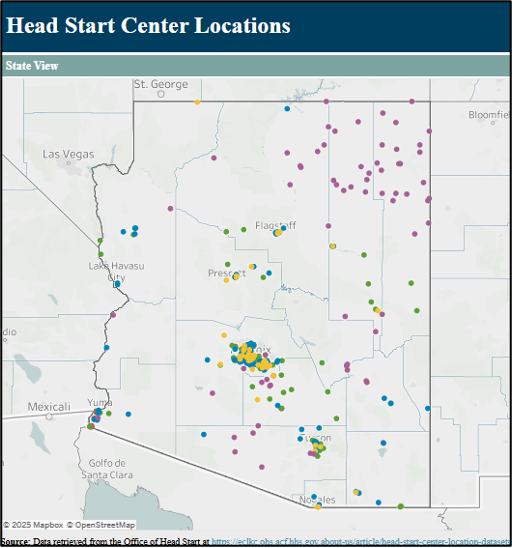
Head Start celebrates 60 years this year as a federally funded program that works to provide comprehensive and high-quality early childhood education, health, and nutrition services to low-income children and families. Head Start serves nearly 800,000 children each year and provides significant short- and long-term benefits to the children and families it serves. In Arizona, there are many Head Start and Early Head Start (HS/EHS) Centers across the state, with over 15,000 funded slots for children 0-5.  

HS/EHS plays a critical role in supporting the healthy development of children living in poverty and helping parents seek employment and educational opportunities. HS/EHS ensures that children who are facing obstacles early on in life have the same opportunity as their peers to be ready for kindergarten. This includes those most vulnerable, like young children with disabilities, children experiencing homelessness, children in foster care, and children in families who are living in poverty. HS/EHS has proven that participation improves the likelihood of educational success, including higher high school completion rates, increased college enrollment, and higher college completion rates. It’s called Head Start for a reason! 

Since January, HS/EHS has been severely impacted. First, a federal funding freeze hit providers, then there was a reduction of Head Start federal support staff. In March, the Department of Health and Human Services announced it was cutting a further 10,000 jobs and reorganizing the Administration for Children and Families, which administers HS/EHS. These individuals ensure high-quality HS/EHS services are available to families nationwide and help administer funding. There are now funds being held for HS/EHS centers. In Arizona, that is around $18 million. These rapid changes and uncertainties are creating panic nationwide and forcing devastating closures, putting early care educators and families in difficult situations.

HS/EHS also helps parents with child care, which is essential as there is high demand and limited availability in the country, especially for people living in rural areas. Approximately 46% of all funded HS/EHS slots are in rural congressional districts. Without HS/EHS, many rural communities would have no licensed child care centers. Arizona is already going through a child care crisis, as child care is not affordable for families, and costs now are upwards of $14,000-$15,000 a year for care.  Because there is no sustainable state investment in the Department of Economic Security’s Child Care Assistance Program, there is currently a waiting list of over 4,000 children for families that make 165% or less of the federal poverty line, which can translate to a single mother with one child who makes less than $35,000. Families and children who are in HS/EHS would qualify for the state program, which would mean that around 20,000 young children and thousands of families would be on the waiting list for child care assistance.

As Members of Congress are on recess and in their districts through April 25th, they will be holding town halls and attending events. With threats of elimination, lack of workforce support, and funding for HS/EHS, Members of Congress must know the benefits of HS/EHS and what underinvestment and elimination of HS/EHS would mean to the state. HS/EHS is represented in eight of the nine congressional districts

HS/EHS has historically had bipartisan support because both parties have come together to prioritize America’s core early learning and care programs. We must continue to support our young children and families who need it the most. We need more investment, not less, in our early care and education systems.   

Medicaid/AHCCCS Matters for Maternal and Infant Health

When moms have quality, affordable health insurance, they can get the support and care they need to be healthy and care for their babies. Medicaid — known as AHCCCS in Arizona — is health insurance that covers a range of maternity care services that support healthy pregnancies, new moms, and thriving babies. More than 80% of pregnancy-related deaths are preventable, and Medicaid is a critical part of preventing these deaths. Medicaid covers prenatal and birth services and screenings, which means moms and babies can get diagnoses and treatment for physical and mental health conditions before they escalate.

In Arizona, one in two births are covered by AHCCCS. However, this critical lifeline is at risk as Congress considers billions of dollars in spending cuts to Medicaid. A new brief from Georgetown University’s Center for Children and Families (CCF), “How Medicaid Supports Maternal and Infant Health,”  explains how Medicaid helps to improve maternal and infant health outcomes:

  • Healthier pregnancies and births for new moms. Many of the physical and mental health conditions that lead to maternal deaths — such as infections, hemorrhages, and depression — occur in the first year after pregnancy, and most are treatable. Medicaid ensures that new and expectant moms are connected to life-saving care and treatment when needed.
  • Essential support for newborns. Medicaid ensures that newborns get a healthy start in life by covering necessary medical care, vaccinations, and screenings. The program also funds NICU care for babies born preterm or with low birthweight and specialized care for infants and toddlers with developmental delays and disabilities.
  • Positive health, education, and economic outcomes for moms and babies. Studies show that Medicaid coverage for moms and children improves health, leads to better education, and increases financial security.

We highlight this issue as Black Maternal Health Week is recognized from April 11-17 to bring attention and action in improving Black maternal health and alarming disparities here in Arizona and in the United States. Learn more from the State of Black Arizona and the March of Dimes about the need for urgent policy solutions. Everyone can play a role in working to prevent pregnancy-related deaths and improve health outcomes for all new moms and babies.

We need our leaders to protect Arizona families, not advance billions of dollars in Medicaid cuts. Congressional cuts to Medicaid would threaten the health of moms and babies and exacerbate our nation’s maternal health crisis.

Budget Threatens Health Care and Food Assistance

The budget process marches forward in Washington, and we continue to learn how devastating the budget cuts they’ve targeted for health care and food security would be to Arizonans and our economy.

Families are working just as hard as ever but struggling to keep up with high costs, yet Congressional leaders are proposing to strip hundreds of thousands of Arizonans of health care and food assistance. They are targeting these lifelines as they extend and expand tax cuts for the highest-income Americans and special interests.

It’s not too late. Our congressional delegation still has time to make decisions that stand with Arizonans by taking Medicaid and Supplemental Nutrition Assistance Program (SNAP) cuts off the table. Congress should not make rushed, reckless cuts that will make it even harder for families.

By working together, we can defend Medicaid/AHCCCS, and protect SNAP food assistance. It’s worth keeping a child from going to bed filled with hunger, ensuring that the 64,000 AHCCCS members who have cancer can get the care they need, and preventing the economic disruption of these cuts in our state. Let your member of Congress know how you, your family, and your community would be affected by these cuts.

Mass Layoffs Bring Instability to Programs for Children and Families – From Head Start to Utility Assistance

At the same time, as we stay engaged in the budget process, we are deeply concerned about the impact that mass layoffs across the federal government will have on services for children and families. Earlier in January, we saw interruptions to federal funding that brought unpredictability to federally funded services.   

Now, this week and over the last month, we’ve seen significant numbers of staff let go, leaving the operation of essential programs in jeopardy. HHS closed several Head Start regional offices, including the office serving Arizona. Head Start, serving more than 14,000 children in Arizona, is a critical program that is tied to better educational and health outcomes for the children served by it. Research shows that Head Start and Early Head Start yield at least $7 for every $1 invested.

These layoffs are not producing meaningful cost savings, but they do leave Head Start centers all over Arizona without critical support, which will impact children and families. Cuts in the staff who work with states to administer child care funds are also significant.

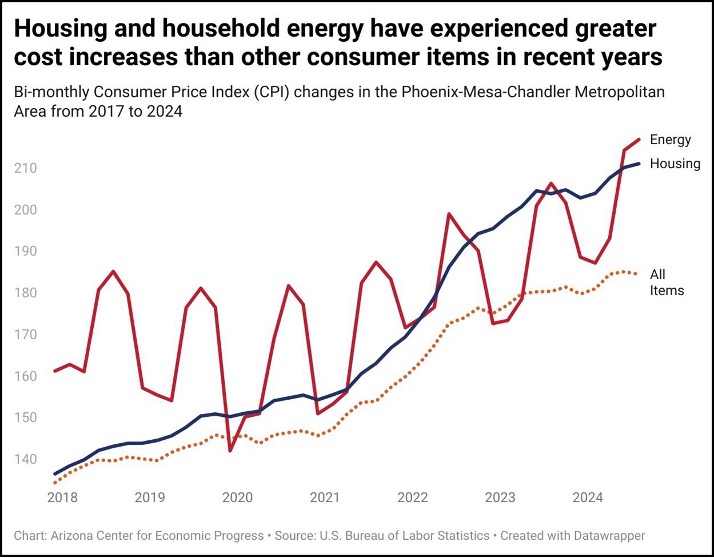
In addition, just as the deadly summer heat nears in Arizona, all staff of the office that distributes federal utility assistance support has been let go. The Low Income Home Energy Assistance Program is there for the most vulnerable Americans to keep their heat on in cold or their air conditioning in the heat. Household energy costs have already increased faster than other costs. LIHEAP utility assistance is essential for individuals and families in need.

Head Start and LIHEAP have long enjoyed bipartisan support in Congress. Let your members of Congress know that you care about these programs and that critical staff should be reinstated to ensure there are no interruptions to Arizona's children and families. 

On top of economic decisions that cause concern about rising prices, such as tariffs. Take a moment to educate our congressional delegation about how you, your family, and your community would be affected.

Cuts to Medicaid and SNAP Will Cut Jobs 

In February of 2025, the U.S. House of Representatives passed a budget resolution that requires devastating Medicaid cuts and cuts to the Supplemental Assistance Nutrition Program (SNAP). Such cuts would cut off hundreds of thousands of Arizonans from vital services and would impact Arizona’s overall economy. Especially at this time when families are already struggling to afford a roof over their heads and a trip to the grocery store, our federal lawmakers should protect, not cut essential health services or cause loss of jobs in our state.

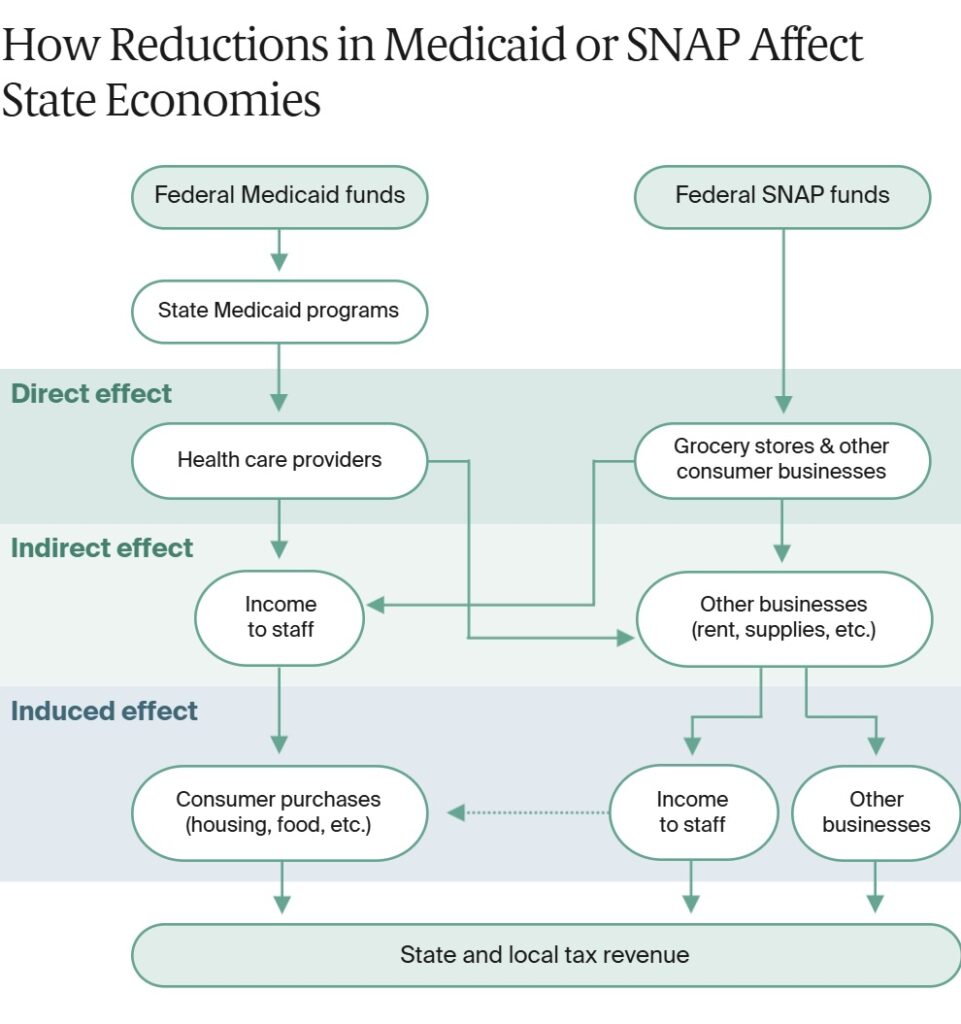
A new report from Commonwealth Fund quantifies the job loss consequences that will come with proposed cuts to Medicaid/AHCCCS coverage and SNAP.  

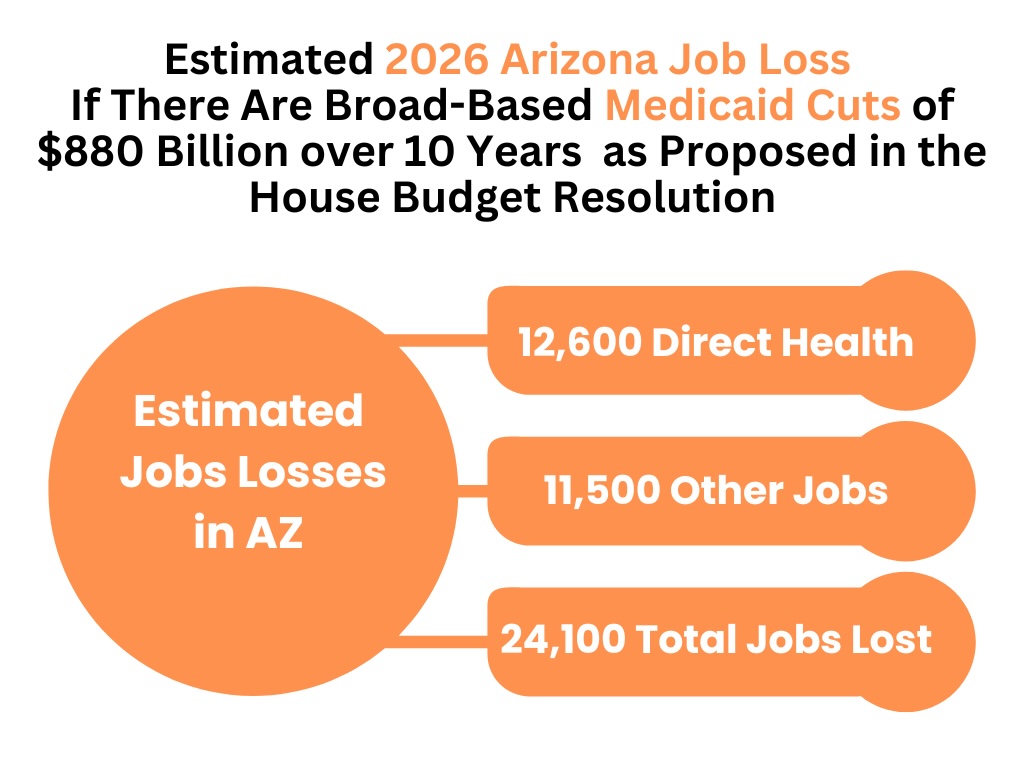
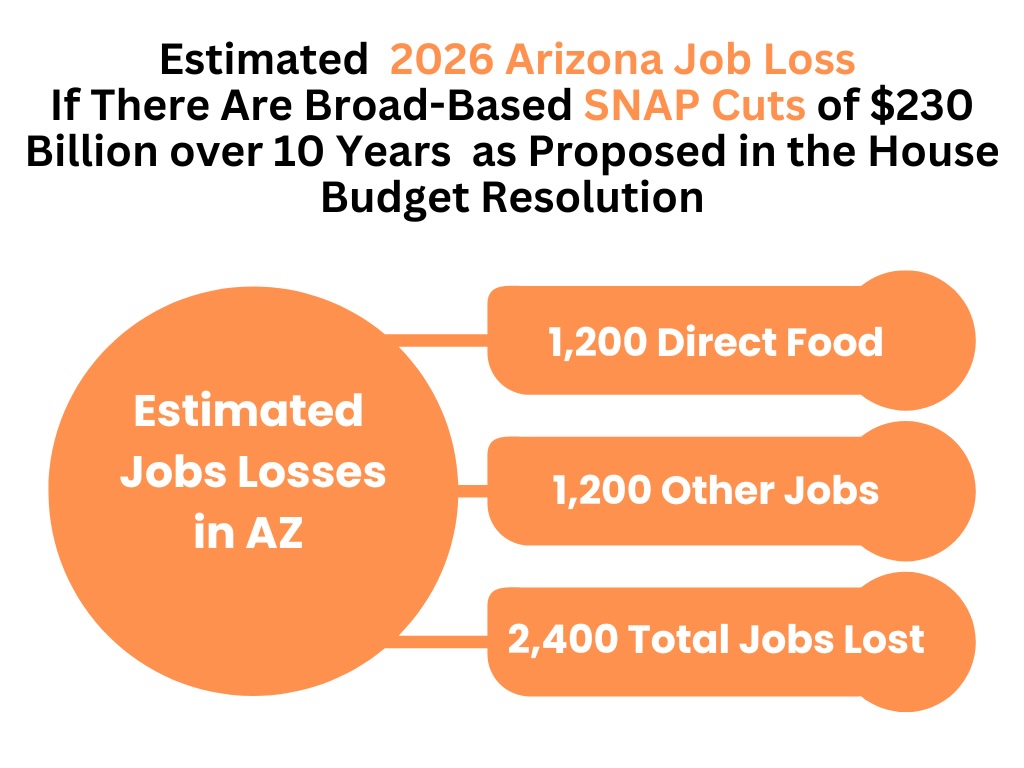
Congress can still avoid the cuts they’ve proposed, but if they go through with it, it is estimated that the Medicaid cuts will lead to a loss of 24,100 jobs, and cuts to SNAP would lead to a loss of 2,400 jobs in Arizona. These estimated losses are for 2026.

When considering cuts to Medicaid and SNAP, we first think of the children, families, seniors, and individuals who will lose their lifeline to health care or food assistance. Beyond that, it is also important to think of the impact that this hit to essential services would have on working people in Arizona and our overall economy. 

Source: Leighton Ku et al., How Potential Federal Cuts to Medicaid and SNAP Could Trigger the Loss of a Million-Plus Jobs, Reduced Economic Activity, and Less State Revenue (Commonwealth Fund, Mar. 2025). https://doi.org/10.26099/x2q9-7027

The Countdown Begins - AZ Students Need a Permanent Fix to the School Spending Limit

Arizona voters approved into law a limit on what public schools can spend in a year based on the needs in 1980. If schools exceed the limit in a school year, as they did last year and again this year, the law allows the legislature to provide an “expenditure override” to allow districts to spend funds that have already been budgeted, with a two-thirds vote in both the House and Senate. An expenditure override does not increase taxes and is independent of the legislature’s budget decisions during the year. 

The spending limit is antiquated and based on what school needs were like in 1980. That is evident by the fact that Arizona is hitting the spending limit this year despite Arizona school funding being the lowest in the nation. Without the expenditure override, schools would be forced to make extreme cuts before the end of this school year. It would be an economic disaster for the Arizona public school system, especially since the state funding per pupil ratio is among the lowest in the nation. Arizona’s public schools are already experiencing a teacher shortage and struggling with additional costs caused by the pandemic. 

Today’s school state funding should not be restricted to budgets created over 40 years ago.  

The Arizona legislature must: 

  1. Send a referral to the ballot to permanently address the issue.  
  1. Continue to pass a resolution to override the limit for each school year until voters address the issue.

The Problem with the Limit. Arizona’s Aggregate Expenditure Limit is outdated. It is based on education spending in the 1980s – before personal computers, the emphasis on STEM education, concerns about school safety, teacher shortages, and increased spending for special education students. Today, it threatens Arizona’s ability to make the investments needed to increase its per-student funding ranking above 48th in the nation.  

Overriding the Limit. Arizona’s constitution allows school districts only one option to avoid budget cuts – a one-time override that must be passed, not by voters, but by the state legislature, and not by a simple majority but by two-thirds of both chambers. Should this override approval not occur by the March 1 deadline, districts will be directed to reduce their budgets to keep within the limit and submit a revised budget in April.  

To make a permanent change to the limit, either the legislature would need to refer the issue to the voters or signatures would need to be collected to place the issue on the ballot at a future general election.  

 Options for a Permanent Fix to the Spending Limit. The only option to avoid districts having to cut their budgets in the middle of the school year is for the legislature to pass a one-time override. But Arizona needs a permanent fix to the current expenditure limit. Here are some options for a permanent fix: 

  • Reset the Base Year. If Arizona retains the Aggregate Spending Limit calculation, it needs to be based on what today’s public schools pay for – computers and technology, student safety, increased pay for teachers, and all other district staff. This option requires voter approval to amend the state constitution. 
  • Use the Weighted Student Count. Instead of using a student count that reflects just enrollment, a weighted student count would take into consideration the higher costs of providing education to students with special needs, small school districts, grade level, and English language learners. 
  • Expand the List of What is Exempt from the Limit. The school spending limit should not include spending linked to school or student characteristics, such as increases in the number of special education students, students with disabilities, or English language learners, or the mix between elementary and secondary students. 

Eliminate the Expenditure Limit Altogether. The K-12 aggregate spending limit was adopted at a time when major changes were being made to how the state’s public schools were to be funded. Concerns existed that these changes might result in significant tax increases. Today, we know that school spending is controlled in several ways. It increases to the per-student base-level spending formula are restricted to inflation or 2 percent, whichever is less, and are set each year by the legislature. Beginning in fiscal year 2025, these inflationary increases to base-level funding can be suspended or even reversed if inflation and employment growth do not exceed limits passed by voters or if K-12 education’s portion of the state general fund budget reaches 49 percent or more. Eliminating the expenditure limit does not mean eliminating all spending limits. 

Download the AEL one-pager PDF here

Group Homes – Our Take

You may be seeing the term “group homes” in the news this week. The topic is being discussed due to a budget shortfall to fund group home placements for children in the foster care system in Arizona.

While the executive and legislative branches haggle over process, timing, and dollars, what Children’s Action Alliance would like for them and the public to understand is that the focus should instead be on the children and the policy decisions that will best support them.

This very week, numerous children undoubtedly had something traumatic happen in their lives that caused them to be separated from their families and brought into the custody of the Arizona Department of Child Safety (DCS).  We owe them our very best temporary solutions to keep them safe from harm until they can be safely reunited with family, whether one or both parents or a kinship caregiver. If these are not options, a safe foster care family is the next best option. For most children, group homes should be the last and rare placement. The data tells us that group home placements, also known as congregate care, do not have the best outcomes for children.

What we really need a hearing on is Arizona’s plan to significantly reduce the number of children who are placed in group homes.

In 2018, the Family First Prevention Services Act was passed with bipartisan congressional support and signed by President Trump. One of the key pillars of the bill was providing prevention services to safely keep families together. Another key pillar was to push states to do better for children by reducing group home placements. Through this legislation, Congress put their money where their mouth is by specifically putting in place a policy that discourages the use of congregate or group care for children and placing a new emphasis on the child’s family and family foster homes. With limited exceptions, the federal government created a policy that will no longer reimburse states for children placed in group care settings for more than two weeks.

Part of the reason DCS has a budget shortfall is that they have not made the transformational changes that other states have made to move away from group home placements. It is time for this meaningful change to happen. Our children deserve better.

Legislators have proposed three bills that CAA is supporting that can make a difference. No one piece of legislation is a silver bullet solution, but we will keep seeking progress.  We encourage you to weigh in through the Request to Speak system or by contacting legislators to share the urgent need for these bills to create change that will better service children.

  • SB1305:  Temporary assistance; child-only case for related kinship caregivers (Sen Shope) Being heard in the House Health and Human Services Committee on Monday, March 24 – Help children stay safely out of the foster care system by supporting grandparents and other relatives to be able to afford to care for them when their parents cannot.
  • SB1333:  Congregate care; dependent children; placement (Sen. Shamp: Carroll, Dunn, et al) Being heard in the House Health and Human Services Committee on Monday, March 24 – Help build accountability for DCS to reduce reliance on group home placement for children.
  • SB1246: Child neglect; exception; financial resources (Sen. Farnsworth) Awaiting Third Read in the House. Prevent the separation of children and families solely due to poverty or lack of financial resources.

Learn more about this issue:

Proposed Cuts to School Meals Put Arizona Kids at Risk

Each day, millions of students fuel their minds and bodies with good, nutritious meals at their schools. School meals have proven to support children’s health and development while improving test scores, attendance, and behavior. However, access to school meals for thousands of children in Arizona is at risk.  

Congressional proposals threaten $12 billion in cuts to school breakfast and lunch meals, and the House Education and Workforce Committee, which has jurisdiction over school meals, has been directed to cut funding for programs within its jurisdiction by $330 billion. The proposals would substantially decrease the number of schools eligible for the Community Eligibility Provision (CEP) and make it more difficult for eligible families to apply for free or reduced-price school meals at non-CEP schools. The CEP allows high-need schools to offer breakfast and lunch at no charge to all students.  

During the 2023–2024 school year, more than 23 million children attending schools in high-poverty areas had access to healthy school meals at no charge through CEP. Program adoption has grown year after year, creating more operational efficiencies for schools and keeping more students fed, all the while reducing stigma and lunch shaming in the cafeteria.  The proposals would force more than 24,000 schools nationwide, serving more than 12 million children, to drop CEP. The proposed cuts would reduce students’ access to nutritious school meals and raise families’ grocery bills while imposing unnecessary and burdensome paperwork requirements on schools.  

The Food Research & Action Center (FRAC) and the Center on Budget and Policy Priorities (CBPP) released state-by-state fact sheets detailing how proposed cuts to the CEP would worsen childhood hunger, hurt struggling families, and create unnecessary burdens for schools and school districts.  The proposed cuts impact 366 schools in Arizona and 148,062 children. All children must continue to have access to nutritious school breakfasts and lunches for their health and learning.  

To read more about the CEP and the schools in Arizona that would be impacted, please review the FRAC and CBPP’s Arizona CEP Fact Sheet.  

Kids Need Health Insurance

Every child should have access to health care. Being able to see a health care provider for preventative health care and to treat illness is essential to the ability of a child to thrive. Yet, Arizona has the second highest rate of uninsured children in the United States.

That’s just one reason why it is important to defend Medicaid, which is AHCCCS in Arizona. At the federal level, Congress is targeting budget proposals that would devastate AHCCCS and Arizona’s health care system. Especially at this time when families are already struggling to afford a roof over their head and a trip to the grocery store, our federal lawmakers should protect, not cut essential health services.

Read about the state of children’s access to health care in our 2024 Kids Count Data Book and in the snapshot included below.

To stay informed, join Children’s Action Alliance and Prevent Child Abuse Arizona for our joint briefing on the latest about state legislation and federal proposals impacting children and families, including AHCCCS/Medicaid, SNAP nutrition assistance, and more.

RSVP below for the webinar, which is taking place on Wednesday, March 19 at 3 PM.

Click here for the snapshot.

Click here to RSVP for the webinar.

Congressional Proposal Would Put 923,400 Children, Seniors, and Arizonans with Disabilities at Risk of Hunger

923,400 people in Arizona who participate in the Supplemental Nutrition Assistance Program (SNAP) could be at risk of going hungry if Congress moves forward with a plan to cut $230 billion or more from the program over nearly 10 years. The specific details of the cuts are not public yet, but some Congressional leaders are calling for states to be required to pay a portion of Arizonan’s SNAP food benefits for the first time. Congress should reject this proposal and protect SNAP from harmful budget cuts.

To fund a portion of SNAP food benefits, Arizona would need to raise revenue, cut funding for other state-funded programs and services, cut SNAP benefit levels, restrict program eligibility, or some combination of these – all options that would cost Arizona more or take food assistance away from Arizonans. This proposal comes as Arizona cut programs and delayed costs, among other budget gimmicks, to resolve a $1.7 billion budget shortfall last summer. While Arizona’s current budget outlook is not in the red, it’s dangerously close.

Congressional leaders have not said how much they would force states to pay of SNAP food benefit costs. But if they create a new state match of 50% of SNAP benefits, it would cost Arizona about $100 million in 2026; a 25% match requirement would cost Arizona $501 million. It would be the first time that the federal government did not fully fund the cost of food benefits, according to a new report from the Center on Budget and Policy Priorities.

Congressional members are pushing deep federal spending cuts to SNAP, Medicaid, and other vital services to “offset” the costs of extending and expanding tax cuts for the wealthy. Their tax cuts for households with incomes in the top 1 percent alone would cost roughly $1.1 trillion over 10 years. Forcing states to help pay SNAP benefits would let federal policymakers enact unpopular cuts while making someone else — state policymakers — decide which participants lose benefits.

“Listen to families. Every time a mom or dad goes to the grocery store, they are paying more for less,” said January Contreras, Executive Director of Children’s Action Alliance. “Our congressional delegation needs to hold the line on good policy that keeps children and seniors from going hungry and brings our tax dollars back into our local economy.”

“The prospect of this radical and sudden cost shift comes at a time when the Arizona budget is already strained,” said Geraldine Miranda. Economic Policy Analyst for the Arizona Center for Economic Progress. “As state legislators negotiate to work key tax and spending priorities into a balanced budget for next fiscal year, even a small new SNAP matching requirement would force wrenching trade-offs between letting more children going hungry and funding other important public services, such as education and public safety.”

If Arizona were required to match even 10% of SNAP benefit costs, the $200 million price to ensure families don’t lose food assistance would be equivalent to eliminating the child care waiting list for the final 6 months of the current budget. Arizona could pass along some of the cost to counties and cities, either directly or indirectly.

In Arizona, more than 68% of participating families have children, and almost 29% of participating families include seniors or adults with disabilities. Research shows SNAP reduces food insecurity and is linked to improved health, education, and economic outcomes and to lower medical costs for participants.

SNAP benefits are spent at more than 4,600 grocery stores in the state. Every $1 in additional spending on SNAP benefits in a weak economy generates $1.54 in economic activity when households use their benefits to shop at local businesses in their communities.