Type: News

Congressional Proposal Would Put 923,400 Children, Seniors, and Arizonans with Disabilities at Risk of Hunger

923,400 people in Arizona who participate in the Supplemental Nutrition Assistance Program (SNAP) could be at risk of going hungry if Congress moves forward with a plan to cut $230 billion or more from the program over nearly 10 years. The specific details of the cuts are not public yet, but some Congressional leaders are calling for states to be required to pay a portion of Arizonan’s SNAP food benefits for the first time. Congress should reject this proposal and protect SNAP from harmful budget cuts.

To fund a portion of SNAP food benefits, Arizona would need to raise revenue, cut funding for other state-funded programs and services, cut SNAP benefit levels, restrict program eligibility, or some combination of these – all options that would cost Arizona more or take food assistance away from Arizonans. This proposal comes as Arizona cut programs and delayed costs, among other budget gimmicks, to resolve a $1.7 billion budget shortfall last summer. While Arizona’s current budget outlook is not in the red, it’s dangerously close.

Congressional leaders have not said how much they would force states to pay of SNAP food benefit costs. But if they create a new state match of 50% of SNAP benefits, it would cost Arizona about $100 million in 2026; a 25% match requirement would cost Arizona $501 million. It would be the first time that the federal government did not fully fund the cost of food benefits, according to a new report from the Center on Budget and Policy Priorities.

Congressional members are pushing deep federal spending cuts to SNAP, Medicaid, and other vital services to “offset” the costs of extending and expanding tax cuts for the wealthy. Their tax cuts for households with incomes in the top 1 percent alone would cost roughly $1.1 trillion over 10 years. Forcing states to help pay SNAP benefits would let federal policymakers enact unpopular cuts while making someone else — state policymakers — decide which participants lose benefits.

“Listen to families. Every time a mom or dad goes to the grocery store, they are paying more for less,” said January Contreras, Executive Director of Children’s Action Alliance. “Our congressional delegation needs to hold the line on good policy that keeps children and seniors from going hungry and brings our tax dollars back into our local economy.”

“The prospect of this radical and sudden cost shift comes at a time when the Arizona budget is already strained,” said Geraldine Miranda. Economic Policy Analyst for the Arizona Center for Economic Progress. “As state legislators negotiate to work key tax and spending priorities into a balanced budget for next fiscal year, even a small new SNAP matching requirement would force wrenching trade-offs between letting more children going hungry and funding other important public services, such as education and public safety.”

If Arizona were required to match even 10% of SNAP benefit costs, the $200 million price to ensure families don’t lose food assistance would be equivalent to eliminating the child care waiting list for the final 6 months of the current budget. Arizona could pass along some of the cost to counties and cities, either directly or indirectly.

In Arizona, more than 68% of participating families have children, and almost 29% of participating families include seniors or adults with disabilities. Research shows SNAP reduces food insecurity and is linked to improved health, education, and economic outcomes and to lower medical costs for participants.

SNAP benefits are spent at more than 4,600 grocery stores in the state. Every $1 in additional spending on SNAP benefits in a weak economy generates $1.54 in economic activity when households use their benefits to shop at local businesses in their communities.

February: A Month of Advocacy for Early Childhood Policies

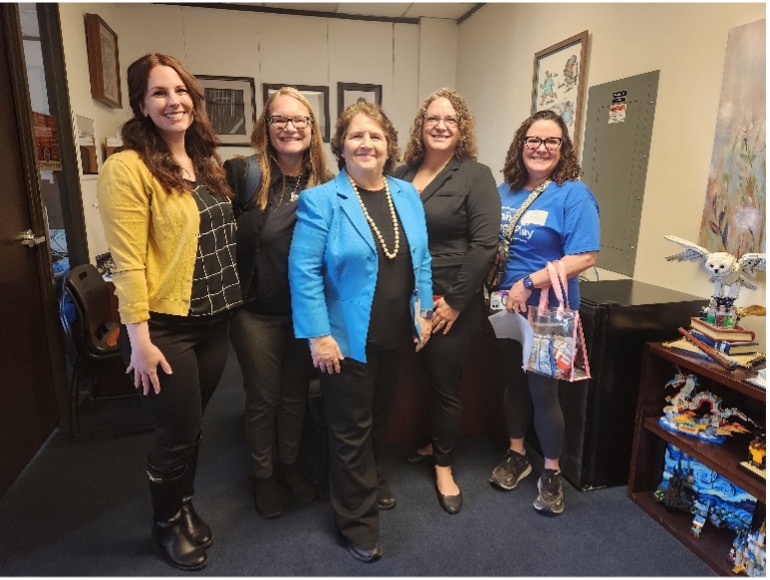
Legislative District 12 constituents and CAA meeting with Senator Epstein (D).

February is the shortest month, but for Children’s Action Alliance (CAA), it was a long and important month of advocating for Arizonans. CAA had presence at both the Arizona State Capitol and on Capitol Hill in Washington D.C. promoting solutions that are needed and matter to young children and families in Arizona. Through our conversations with state and federal lawmakers, the consistent messaging was that we needed more public investment in child care and early learning so our youngest Arizonans can thrive.


Early Childhood Day

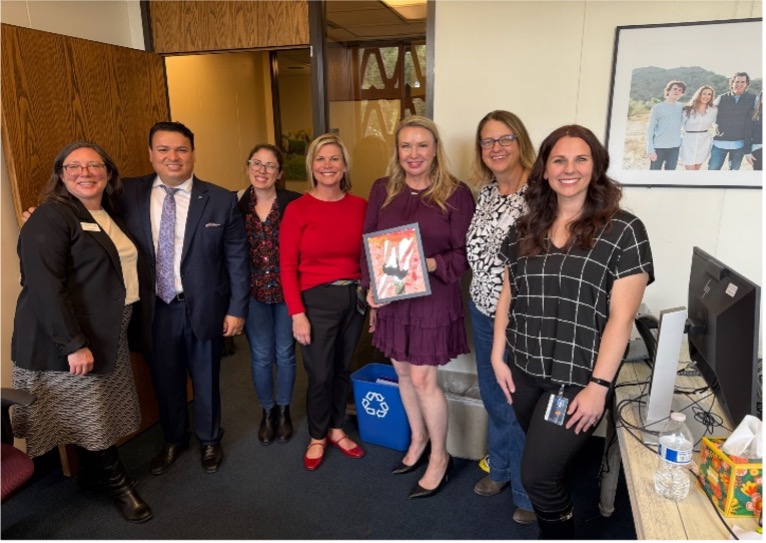
Legislative District 4 constituents and early childhood leaders, including KinderCare, First Things First, and CAA, meeting with Senator Werner(R).

On February 17th, CAA joined the Arizona Early Childhood Alliance (AZECA), along with partners, to meet with state legislators to promote legislation that decreased the child care costs for families, increased access to child care, and addressed the shortage of early childhood educators. Specifically, CAA discussed important solutions that helped families through:

  • HB 2643 Appropriation, Child Care
    • The bill appropriates a crucial $120 million from the state General Fund to the Department of Economic Security (DES) for child care assistance.
    • DES implemented a waiting list for most families applying to the Child Care Assistance Program on August 1, 2024, due to increased demand and limited funding. As of 02/28/2025, there are 1,587 families and 2,607 children on the waiting list.
    • As the appropriation bill never received a hearing in its chamber of origin, Governor Hobbs included a $112.4 million on-going appropriation from the state General Fund for the Child Care Assistance Program in her Fiscal Year 2026 (FY26) Executive Budget. This means that this will still be a priority discussion item during budget negotiations to help alleviate some of the waiting list.
  • HB 2778 Luxury Tax; Nicotine; Vapor; Products
    • The bill imposes a luxury tax on nicotine and vapor products in the same manner as other tobacco products. This is important as the bill directs tax revenue from nicotine and vapor products to be deposited for the Early Childhood Development and Health Board, also known as First Things First (60%), and the state General Fund (40%), which increases state revenue for important programs.
    • First Things First is Arizona’s only public funding source dedicated exclusively to early childhood. On November 7, 2006, Arizonans made a historic decision on behalf of our state’s young children by passing Proposition 203, a citizen’s initiative to fund quality early childhood development and health programs for children, birth to age 5, before kindergarten. Voters backed that commitment with an 80-cent per pack increase on tobacco products. Given the shift away from tobacco product purchases in recent years, First Things First revenue has declined. The bill is an extension of the voter initiative given the innovation of these newer products in recent years.
    • With the decline in revenue, First Things First has had to limit the number of programs, offerings, and financial assistance for early childhood programs, like their Quality First Scholarships, that help low-income families afford quality early care and education for their young children
    • Unfortunately, this bill also did not get a hearing in its chamber of origin- leaving early childhood advocates frustrated at the lack of support from our state lawmakers on common sense solutions that are already adapted in over 30 states.

As the legislative session is far from being over, CAA will continue to advocate for these state level policies that increase funding for child care and early learning programs.

NAEYC Public Policy Forum

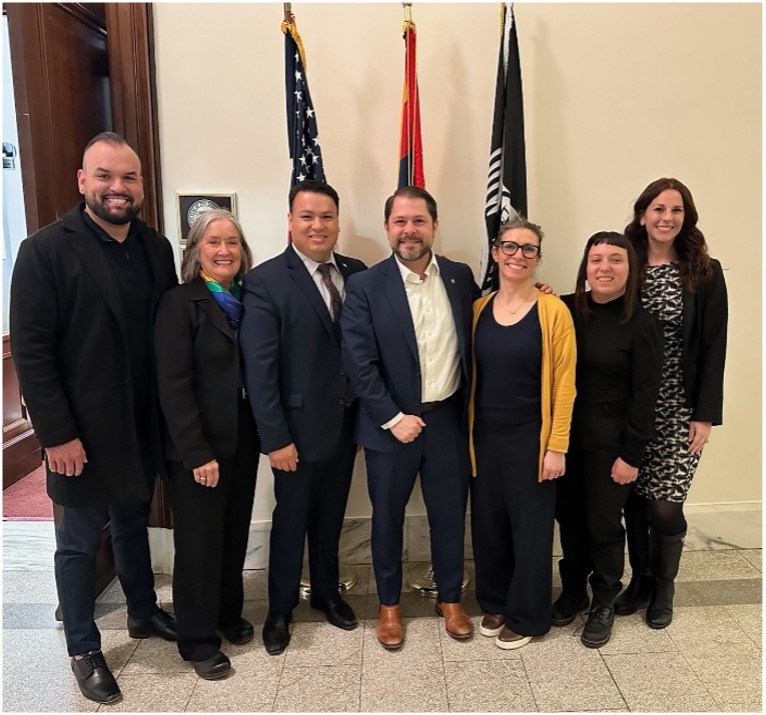
Senator Gallego with early childhood leaders

CAA’s Director of Early Learning and Education, Kyrstyn Paulat, attended the National Association for the Education of Young Children’s (NAEYC) 2025 Public Policy Forum in Washington, D.C. February 23rd-25th. NAEYC represents more than 50,000 early childhood educators that are committed to promoting high-quality early childhood education for young children. CAA was a member of the Arizona core team that included also NAEYC’s Arizona affiliates, Arizona Association for the Education of Young Children (AZAEYC), along with their southern chapter (SAZAEYC), as well as First Things First, Arizona State University, and Northern Arizona University. On February 25th, Arizona’s core team attended visits with seven out of the nine Congressional Offices, and both U.S. Senate Offices. Specifically, the Arizona team emphasized that Congress should:

  • Protect and prioritize new investments in key federal child care and early learning programs that support educators, families and young children, including the Child Care and Development Block Grant, Head Start, and Individuals with Disabilities Education Act (IDEA), in both the FY25 and FY26 appropriations bills;
  • Oppose cuts to these programs, and other programs families with young children and early educators rely on, including Medicaid and the Supplemental Nutrition Assistance Program (SNAP);
  • Prioritize tax approaches that support families with young children to afford child care, like the Child and Dependent Care Tax Credit, and making the tax credit fully refundable.
AZAEYC’s Albert Murrieta, SAZAEYC’s Diana Hill, and CAA’s Kyrstyn Paulat meeting with Representative Ciscomani (R).

Our meetings further reinforced the importance of federal funding to our state and how cuts to these programs would be harmful to our children, families, and communities. Although the House passed the budget resolution last week, there are many House Republicans, like Representative Ciscomani, that are opposed to large cuts to important programs, like Medicaid, and know the devasting effects these would have on their communities. The budget plan does not directly impose specific cuts, but it does lay out guidelines on how to offset the tax reforms, such as directing the House Energy and Commerce Committee, which oversees Medicare and Medicaid, to cut at least $880 billion over 10 years.

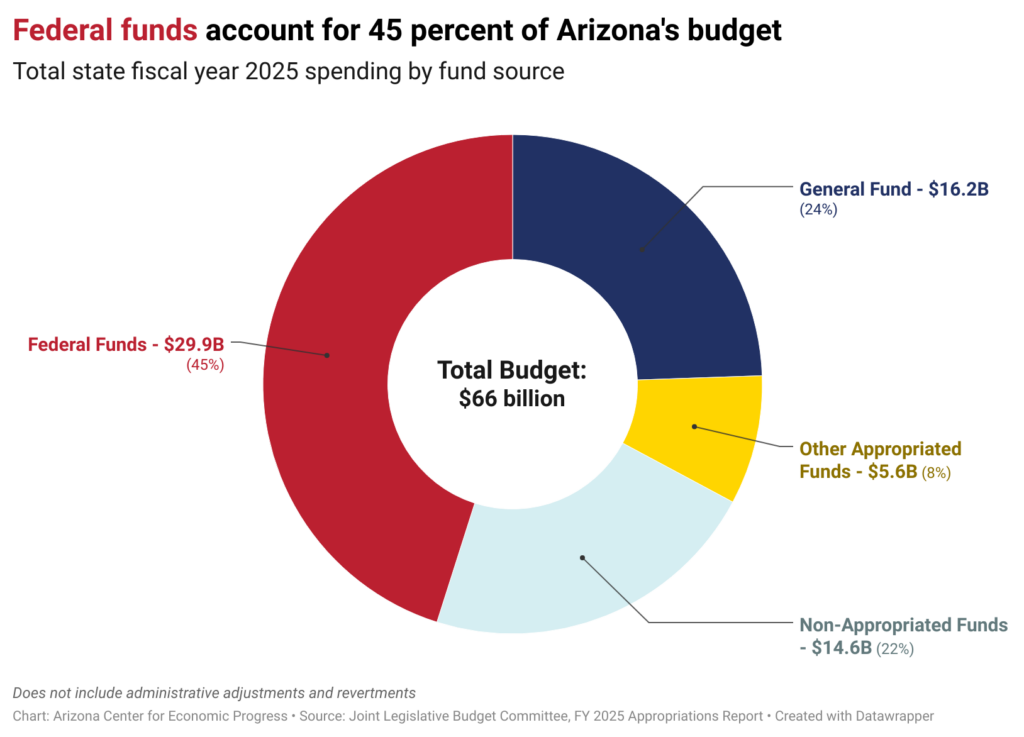
The passing of the budget resolution was the first step in a very long process of budget reconciliation. The Arizona team communicated in all meetings how vital these federal programs and funding are to our state as Arizona depends more on federal funds than most states. Federal funds make up 44% of Arizona’s revenues, above the national average of 32%. Specifically, our team stated that 74% of that federal funding is Medicaid and in early childhood, Medicaid covers more than half of Arizona’s births, and roughly 36% of children. In rural Arizona, even more children rely on Medicaid, as more than 50% of the population of children are insured through the public health insurance.

Looking Forward

The state and federal government must expand its support for the early care and education sector, because investing in our children means investing in the future of our society. As we are getting prepared for a long uphill battle, please know your stories and experiences are so important in shaping these policy decisions.

Please contact your elected officials to urge them to prioritize early childhood policies, because an investment in early learning and child care is essential for the well-being of Arizona’s children, their education and health, and our future.

Federal Funding Freeze Update

A few notes on protecting federal funds that are vital to children and families in Arizona:

  1. Over the last two days, the federal government, through Office of Budget Management (OMB) Memorandum M-25-13, directed state agencies to review all federal grants and to temporarily freeze disbursement of federal funds. This action created alarming questions and concern about what was to be included or not included. By the afternoon, OMB provided clarity on some key funding exceptions. Litigation quickly occurred, and a judge intervened to delay implementation of the memo through, at least, Monday, February 3, 2025. 
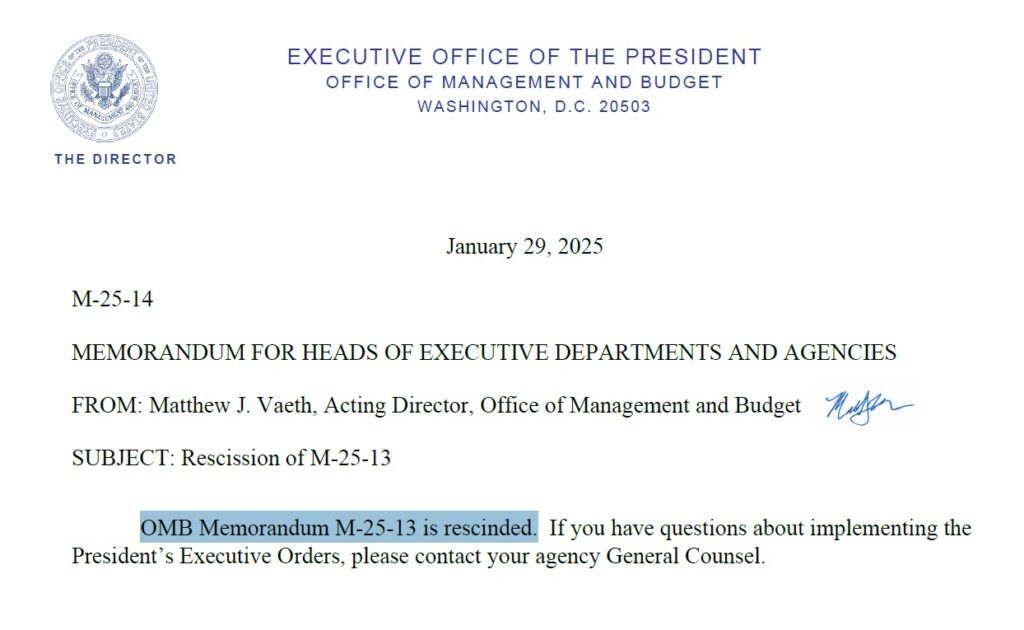
  2. Today, OMB Memorandum M-25-13 is rescinded. In fact, those are the exact words used in a short memo from OMB dated today. 
  3. While it is a positive development that the memo is rescinded, serious questions and concern remain about the risk to services critical to children and families that would disappear without federal funding. A full-scale review of federal grants and payments continues to proceed. CAA is collecting stories to shine a light on the impact in Arizona, and you can share the impact to you or your organization to help us to do this. 
  4. There are threats to vital services for children and families that existed before this week’s memos and that continue to loom. Drastic cuts to Medicaid (the Arizona Health Care Cost Containment System or AHCCCS) that are being discussed in Congress would take away health care from hundreds of thousands of Arizonans and destabilize our state’s health care system. Similarly, cuts to the State Nutrition Assistance Program(SNAP) would increase child hunger. These are preliminary proposals for now and CAA is working every day with partners to prevent them from gaining support. 

We will continue to work to keep you informed. Our collaboration with you and all of our partners is key to policy decisions that work for children and families – not against them.

Protect Federal Funds for Children and Families

Is this pause in federal funds impacting you, your organization, or children and families in Arizona? We are collecting stories to help shine a light on the potential impacts of loss of federal funds. Please consider sharing your story with us and collaborating to protect vital services for children and families.

The federal government, through the Office of Management and Budget (OMB), has directed agencies to review federal grants and financial assistance and to temporarily pause federal financial assistance. This means a sudden halt to the disbursement of federal funds to states, tribes, local governments, non-profit organizations, private sector partners, and more. 

This directive, in OMB Memo 25-13, causes great concern and uncertainty. 

A Pause in Federal Funds Will Hurt Arizona

Arizona receives a significant amount of federal funds that are vital to the lives of Arizonans. In a 2024 state-by-state analysis of the percentage of state revenue from federal funds, Arizona was in the top ten states, ranked as the state with the third-highest share of federal funds. More recent recent data demonstrates that federal funds account for 45% of Arizona’s budget. This ranges from health care to highways to veteran’s care, child care, and services for seniors. Even a temporary pause in Arizona’s federal funds has the potential to cause harm.

Arizonans Rely on Lifesaving and Life-Changing Services Supported by Federal Funds

As the former Assistant Secretary of the Administration for Children and Families (ACF) at the U.S. Department of Health and Human Services (HHS), I know how much pain will be caused if federal investments are withheld. I know because I’ve met so many of the parents, children, and people who are impacted by what they often call “lifesaving” or “life-changing” services. At HHS, funds are disbursed for critical programming, including Medicaid and State Children’s Health Insurance Programs, substance use treatment, suicide prevention, pandemic preparedness, and much more. At ACF alone, federal funds historically support: Children in foster care, their kinship caregivers, and foster families; Child care services in every state and Head Start programs that parents and employers rely on; Services for victims of domestic violence and human trafficking; Housing and job assistance for teenagers as they exit the foster care system and young people in the runaway and homeless youth system; Utility assistance to help people keep their heat on in the cold and air conditioner in the summer; and Temporary assistance for needy families to help Americans get through tough times. Pulling the rug out from children, families, and the American people at the toughest times of their lives, and when they are already facing rising costs, will be especially painful. 

Need for Greater Clarity
Many questions remain about the scope of the directive to halt federal funds.

What is the universe of funding at risk under the directive? This requires clarity. The answer seems likely to hinge on the interpretations of federal administrators. The memo notes that the directive does not impact Social Security or Medicare payments or assistance provided directly to individuals. In addition to the memo, OMB also issued a Q&A guidance related to the memo. This Q&A states that Medicaid, Supplemental Nutrition Assistance Program (SNAP), and Head Start will continue without pause. These clarifying statements are important, especially as some federal funding payment systems have been inaccessible today. Furthermore, even with these clear exceptions, many consequential services and programs supported by federal funds remain at risk.

How Long Will Funds Be Paused? This is an open question. The memo directs federal agencies to report back to the White House based on their review by February 10. Courts and judicial actions will also have an impact on this as litigation proceeds. 

Is it Legal to Pause Congressionally Appropriated Funds? This question is already being litigated, and a court has quickly intervened to halt the effects of this directive until at least Monday. We often hear of Congress as having the “power of the purse” because the U.S. Constitution grants Congress the power to impose taxes and spend revenues. In addition, the Impoundment Control Act also created controls to prevent unilateral executive actions that delay or cancel funding passed by Congress. 

What’s Next? Children’s Action Alliance stands with our partners statewide who show up for children and families every day. We will share the potential impact of this and other federal actions with our congressional delegation and other Arizona leaders. All of us will continue to see news come out about new federal actions, litigation, and court decisions.

We will stay informed and share information so we can collectively take action to protect services for children and families. Join us in these efforts.

Is this pause in federal funds impacting you, your organization or children and families in Arizona? We are collecting stories to help shine a light on the potential impacts of loss of federal funds. Please consider sharing your story with us and collaborating to protect vital services for children and families.

Protecting Immigrant and Mixed Status Families

Children’s Action Alliance works to build an Arizona where all children and families thrive. When children and families must live in fear just to obtain an education in school, our policymakers are failing. 

On January 20, 2025, the federal government rescinded a policy that protected sensitive locations such as churches, schools, and hospitals from immigration enforcement.  The cruel elimination of this protection allows officials to conduct immigration enforcement operations in these spaces, causing fear even in what have been – and should remain – safe spaces.  

The policy's removal threatens the well-being and safety of immigrant children and families in Arizona. 

In preparation and response to these federal actions, families and allies can seek and share valuable resources, including the following: 

Children’s Action Alliance is committed to advocating for policies to protect children and their families. We stand opposed to the inhumane elimination of protected spaces where children and families should feel safe, the unconstitutional attack on birthright citizenship, and the devastating consequences these actions will have on children and their ability to thrive.  

We urge community members to stay informed and share resources for the protection of all children and families in Arizona.

Building the Future Together: Meet Our New Team Members!

We are thrilled to announce our newest team members: Jennifer J. Burns, Lori Goodspeed, and Nathan von Gnechten. 

Jennifer serves Children’s Action Alliance as our Director of Government Relations and Health Policy. Jennifer drives the health policy agenda and also provides leadership in our work with policymakers.

Lori joins Children’s Action Alliance as our new Youth and Family Advocacy Coordinator. In this role, Lori works to strengthen youth and family engagement, including kinship caregivers and youth who’ve experienced the foster care system.

Nathan serves as an Economic Policy Analyst at the Arizona Center for Economic Progress. In this role, Nathan provides research and analysis to advance budget and policy decisions that support the well-being of communities across Arizona.

We are excited to welcome these new team members to help carry out our mission to the children, families, and people of Arizona.

AHCCCS and KidsCare are Essential in Rural Arizona

Arizona Health Care Cost Containment System (AHCCCS), Arizona’s Medicaid program, and KidsCare, Arizona’s Children’s Health Insurance Program (CHIP), are key to the health of children and families. A  new report from the Georgetown University Center for Children and Families  makes this clear, especially the role that Medicaid and CHIP have in small towns and rural counties in Arizona.

The report reveals important regional trends regarding health insurance coverage. Children and adults in rural areas often have higher rates of being uninsured. According to the most recent U.S. Census data, rural areas like La Paz, Apache, Navajo, and Gila County had the highest percentages of children without health insurance in Arizona. This shows that public health insurance options are important to all Arizonans, and that is especially true in rural areas.

Read more about the importance of Medicaid and CHIP for children and adults in Arizona's small towns and rural counties in this new Georgetown University CCF report.

The 2025 Legislative Session

As we kick off 2025 and a new legislative session, it’s the perfect time to think about the kind of Arizona we all want – one where children and their families can keep a roof over their head, can stay well or get well through health insurance, have enough to eat, are safe, and have access to a strong education starting with affordable child care and early learning. What we know is the ability of families to meet these needs for children isn’t just essential to them, it’s essential to the future of Arizona. We can build that Arizona.

Today is opening day at the Arizona State Legislature as well as the State of the State address by Governor Hobbs. Many legislative bills are already filed, and both executive and legislative budget proposals will soon be unveiled. For 37 years, Children’s Action Alliance has been a staunch advocate and watchdog for children at the State Capitol. We enter 2025 with this same commitment. We will keep you informed of our policy priorities and of policy and budget proposals that hurt or help children and families. We hope your commitment is to make your voice heard alongside us.

Together, we can bring change that supports the safety and success of children in Arizona.

Click here to view a snapshot of our 2025 Legislative Agenda.

Our 2025 Legislative Priorities

Children’s Action Alliance (CAA) is committed to making Arizona a state where all children and families thrive.

Our 2025 Legislative Agenda focuses on:

  • Health Care: Protect access to AHCCCS and KidsCare and preventative health services
  • Child Care: Growing access to affordable, high-quality child care and early learning
  • Family Supports: Economic supports to prevent family crisis
  • Foster Care: Less children in congregate care and more support for youth transitioning out of foster care and for kinship caregivers who step in to provide care for children when they need it most

Click here to learn more about CAA's priorities to create an Arizona where all children and families thrive.