Type: News

Congressional Proposal Would Put 923,400 Children, Seniors, and Arizonans with Disabilities at Risk of Hunger

923,400 people in Arizona who participate in the Supplemental Nutrition Assistance Program (SNAP) could be at risk of going hungry if Congress moves forward with a plan to cut $230 billion or more from the program over nearly 10 years. The specific details of the cuts are not public yet, but some Congressional leaders are calling for states to be required to pay a portion of Arizonan’s SNAP food benefits for the first time. Congress should reject this proposal and protect SNAP from harmful budget cuts.

To fund a portion of SNAP food benefits, Arizona would need to raise revenue, cut funding for other state-funded programs and services, cut SNAP benefit levels, restrict program eligibility, or some combination of these – all options that would cost Arizona more or take food assistance away from Arizonans. This proposal comes as Arizona cut programs and delayed costs, among other budget gimmicks, to resolve a $1.7 billion budget shortfall last summer. While Arizona’s current budget outlook is not in the red, it’s dangerously close.

Congressional leaders have not said how much they would force states to pay of SNAP food benefit costs. But if they create a new state match of 50% of SNAP benefits, it would cost Arizona about $100 million in 2026; a 25% match requirement would cost Arizona $501 million. It would be the first time that the federal government did not fully fund the cost of food benefits, according to a new report from the Center on Budget and Policy Priorities.

Congressional members are pushing deep federal spending cuts to SNAP, Medicaid, and other vital services to “offset” the costs of extending and expanding tax cuts for the wealthy. Their tax cuts for households with incomes in the top 1 percent alone would cost roughly $1.1 trillion over 10 years. Forcing states to help pay SNAP benefits would let federal policymakers enact unpopular cuts while making someone else — state policymakers — decide which participants lose benefits.

“Listen to families. Every time a mom or dad goes to the grocery store, they are paying more for less,” said January Contreras, Executive Director of Children’s Action Alliance. “Our congressional delegation needs to hold the line on good policy that keeps children and seniors from going hungry and brings our tax dollars back into our local economy.”

“The prospect of this radical and sudden cost shift comes at a time when the Arizona budget is already strained,” said Geraldine Miranda. Economic Policy Analyst for the Arizona Center for Economic Progress. “As state legislators negotiate to work key tax and spending priorities into a balanced budget for next fiscal year, even a small new SNAP matching requirement would force wrenching trade-offs between letting more children going hungry and funding other important public services, such as education and public safety.”

If Arizona were required to match even 10% of SNAP benefit costs, the $200 million price to ensure families don’t lose food assistance would be equivalent to eliminating the child care waiting list for the final 6 months of the current budget. Arizona could pass along some of the cost to counties and cities, either directly or indirectly.

In Arizona, more than 68% of participating families have children, and almost 29% of participating families include seniors or adults with disabilities. Research shows SNAP reduces food insecurity and is linked to improved health, education, and economic outcomes and to lower medical costs for participants.

SNAP benefits are spent at more than 4,600 grocery stores in the state. Every $1 in additional spending on SNAP benefits in a weak economy generates $1.54 in economic activity when households use their benefits to shop at local businesses in their communities.

Febrero: un mes dedicado a la promoción de políticas para la primera infancia

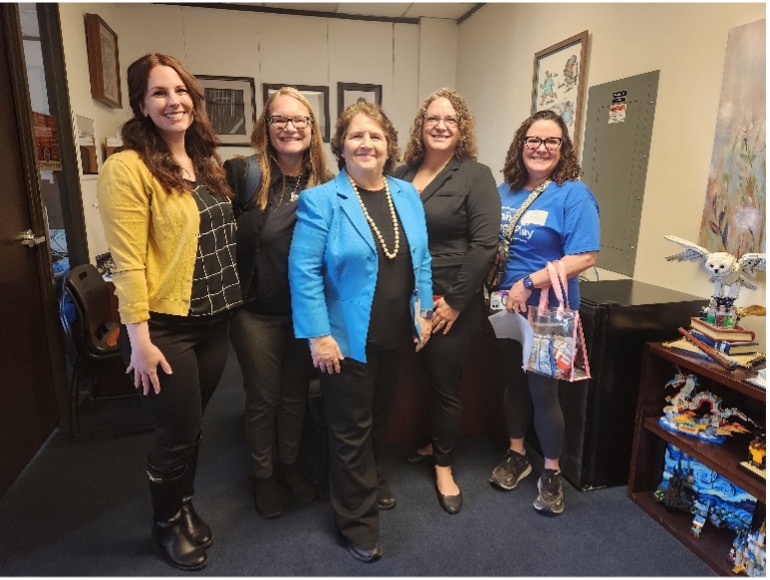
Los electores del Distrito Legislativo 12 y la CAA se reúnen con el senador Epstein (D).

Febrero es el mes más corto, pero para Children's Action Alliance (CAA) fue un mes largo e importante en el que defendió los intereses de los arizonenses. CAA estuvo presente tanto en el Capitolio del estado de Arizona como en el Capitolio de Washington D.C. promoviendo soluciones necesarias y relevantes para los niños pequeños y las familias de Arizona. A través de nuestras conversaciones con los legisladores estatales y federales, el mensaje constante fue que necesitábamos más inversión pública en el cuidado infantil y el aprendizaje temprano para que los arizonenses más jóvenes pudieran prosperar.


Día de la Primera Infancia

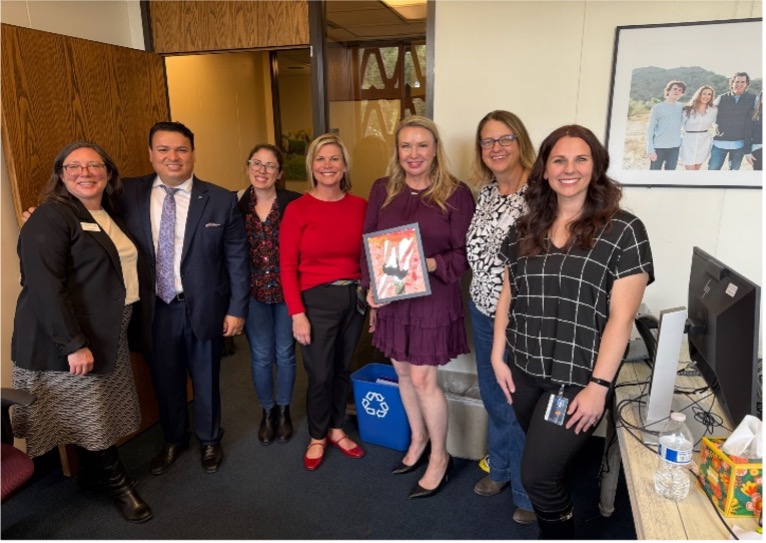
Los electores del Distrito Legislativo 4 y líderes de la primera infancia, entre ellos KinderCare, First Things First y CAA, se reúnen con el senador Werner (R).

El 17 de febrero, CAA se unió a la Alianza para la Primera Infancia de Arizona (AZECA), junto con otros socios, para reunirse con legisladores estatales con el fin de promover una legislación que redujera los costos del cuidado infantil para las familias, aumentara el acceso al cuidado infantil y abordara la escasez de educadores de la primera infancia. En concreto, CAA debatió soluciones importantes que ayudaban a las familias a través de:

  • HB 2643 Asignación presupuestaria, cuidado infantil
    • El proyecto de ley asigna 120 millones de dólares del Fondo General del estado al Departamento de Seguridad Económica (DES) para ayudas a la guardería.
    • El DES implementó una lista de espera para la mayoría de las familias que solicitaron el Programa de Asistencia para el Cuidado Infantil el 1 de agosto de 2024, debido al aumento de la demanda y a la limitación de los fondos. A fecha de 28/02/2025, hay 1587 familias y 2607 niños en la lista de espera.
    • Dado que el proyecto de ley de asignación presupuestaria nunca se sometió a debate en la cámara en la que se originó, la gobernadora Hobbs incluyó una asignación presupuestaria continua de 112,4 millones de dólares del Fondo General del estado para el Programa de Ayuda a la Guardería Infantil en su Presupuesto Ejecutivo para el año fiscal 2026 (FY26). Esto significa que seguirá siendo un tema prioritario de debate durante las negociaciones presupuestarias para ayudar a reducir la lista de espera.
  • HB 2778 Impuesto sobre artículos de lujo; nicotina; vapor; productos
    • El proyecto de ley impone un impuesto de lujo a los productos de nicotina y vapor de la misma manera que a otros productos de tabaco. Esto es importante, ya que el proyecto de ley destina los ingresos fiscales procedentes de los productos de nicotina y vapor al Consejo de Desarrollo y Salud de la Primera Infancia, también conocido como First Things First (60 %), y al Fondo General del estado (40 %), lo que aumenta los ingresos estatales para programas importantes.
    • First Things First es la única fuente de financiación pública de Arizona dedicada exclusivamente a la primera infancia. El 7 de noviembre de 2006, los habitantes de Arizona tomaron una decisión histórica en nombre de los niños pequeños de nuestro estado al aprobar la Proposición 203, una iniciativa ciudadana para financiar programas de calidad para el desarrollo y la salud de los niños desde el nacimiento hasta los 5 años, antes de entrar en el jardín de infancia. Los votantes respaldaron ese compromiso con un aumento de 80 centavos por paquete en los productos del tabaco. Dado el descenso en la compra de productos del tabaco en los últimos años, los ingresos de First Things First han disminuido. El proyecto de ley es una extensión de la iniciativa de los votantes, dada la innovación de estos nuevos productos en los últimos años.
    • Con la disminución de los ingresos, First Things First ha tenido que limitar el número de programas, ofertas y ayudas económicas para programas de educación infantil, como sus becas Quality First Scholarships, que ayudan a las familias con bajos ingresos a pagar una educación y cuidados de calidad para sus hijos pequeños.
    • Desafortunadamente, este proyecto de ley tampoco fue sometido a debate en la cámara en la que se presentó, lo que dejó a los defensores de la primera infancia frustrados por la falta de apoyo de nuestros legisladores estatales a soluciones de sentido común que ya se han adaptado en más de 30 estados.

Dado que la sesión legislativa aún está lejos de terminar, la CAA seguirá abogando por estas políticas estatales que aumentan la financiación para los programas de cuidado infantil y aprendizaje temprano.

NAEYC Foro de Políticas Públicas

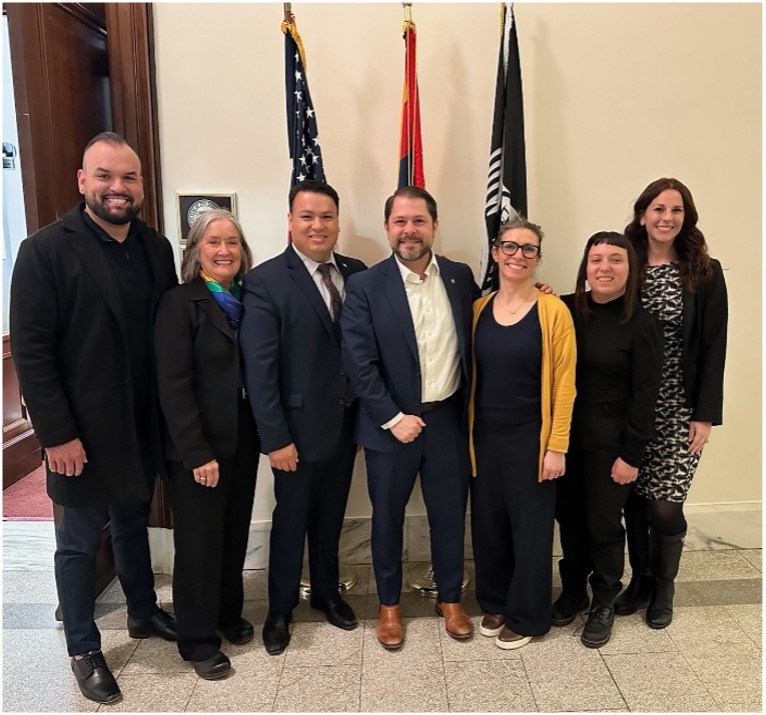
El senador Gallego con líderes de la primera infancia

La directora de Aprendizaje Temprano y Educación de la CAA, Kyrstyn Paulat, asistió al Foro de Políticas Públicas 2025 de la Asociación Nacional para la Educación de Niños Pequeños (NAEYC) en Washington, D.C.,del 23 al 25 de febrero. La NAEYC representa a más de 50 000 educadores de la primera infancia comprometidos con la promoción de una educación infantil de alta calidad para los niños pequeños. La CAA formó parte del equipo central de Arizona, que también incluía a las filiales de la NAEYC en Arizona, la Asociación de Arizona para la Educación de Niños Pequeños (AZAEYC), junto con su sección sur (SAZAEYC), así como First Things First, la Universidad Estatal de Arizona y la Universidad del Norte de Arizona.El 25 de febrero, el equipo central de Arizona asistió a visitas a siete de las nueve oficinas del Congreso y a las dos oficinas del Senado de los Estados Unidos. En concreto, el equipo de Arizona hizo hincapié en que el Congreso debería:

  • Proteger y priorizar nuevas inversiones en programas federales clave de cuidado infantil y aprendizaje temprano que apoyan a los educadores, las familias y los niños pequeños, incluyendo la Subvención en Bloque para el Cuidado y Desarrollo Infantil, Head Start y la Ley de Educación para Individuos con Discapacidades (IDEA), tanto en los proyectos de ley de asignaciones presupuestarias para el año fiscal 2025 como para el año fiscal 2026.
  • Opóngase a los recortes en estos programas y otros programas de los que dependen las familias con niños pequeños y los educadores de la primera infancia, incluidos Medicaid y el Programa de Asistencia Nutricional Suplementaria (SNAP).
  • Dar prioridad a las medidas fiscales que ayuden a las familias con niños pequeños a costear el cuidado infantil, como la deducción fiscal por cuidado de hijos y dependientes, y hacer que dicha deducción sea totalmente reembolsable.
Albert Murrieta, de AZAEYC; Diana Hill, de SAZAEYC, y Kyrstyn Paulat, de CAA, reunidos con el representante Ciscomani (derecha).

Nuestras reuniones reforzaron aún más la importancia de la financiación federal para nuestro estado y cómo los recortes a estos programas serían perjudiciales para nuestros niños, familias y comunidades. Aunque la Cámara de Representantes aprobó laresolución presupuestariala semana pasada, hay muchos republicanos de la Cámara, como el representante Ciscomani, que se oponen a los grandes recortes en programas importantes, como Medicaid, y conocen los efectos devastadores que estos tendrían en sus comunidades. El plan presupuestario no impone directamente recortes específicos, pero sí establece directrices sobre cómo compensar las reformas fiscales, como ordenar al Comité de Energía y Comercio de la Cámara de Representantes, que supervisa Medicare y Medicaid, que recorte al menos 880 000 millones de dólares en 10 años.

La aprobación de la resolución presupuestaria fue el primer paso de un proceso muy largo de conciliación presupuestaria. El equipo de Arizona comunicó en todas las reuniones lo importantes que son estos programas y fondos federales para nuestro estado, ya que Arizona depende más de los fondos federales que la mayoría de los estados. Los fondos federales representan el 44 % de los ingresos de Arizona, por encima de la media nacional del 32 %. En concreto, nuestro equipo afirmó que el 74 % de esa financiación federal corresponde a Medicaid y que, en la primera infancia, Medicaid cubre más de la mitad de los nacimientos de Arizona y aproximadamente el 36 % de los niños. En las zonas rurales de Arizona, aún más niños dependen de Medicaid, ya que más del 50 % de la población infantil está asegurada a través del seguro médico público.

Mirando hacia el futuro

El gobierno estatal y federal debe ampliar su apoyo al sector de la atención y la educación tempranas, porque invertir en nuestros niños significa invertir en el futuro de nuestra sociedad. Mientras nos preparamos para una larga y ardua batalla, queremos que sepan que sus historias y experiencias son muy importantes para dar forma a estas decisiones políticas.

Póngase en contacto con sus representantes electos para instarles a que den prioridad a las políticas de primera infancia, ya que la inversión en el aprendizaje temprano y el cuidado infantil es esencial para el bienestar de los niños de Arizona, su educación y salud, y nuestro futuro.

Federal Funding Freeze Update

A few notes on protecting federal funds that are vital to children and families in Arizona:

  1. Over the last two days, the federal government, through Office of Budget Management (OMB) Memorandum M-25-13, directed state agencies to review all federal grants and to temporarily freeze disbursement of federal funds. This action created alarming questions and concern about what was to be included or not included. By the afternoon, OMB provided clarity on some key funding exceptions. Litigation quickly occurred, and a judge intervened to delay implementation of the memo through, at least, Monday, February 3, 2025. 
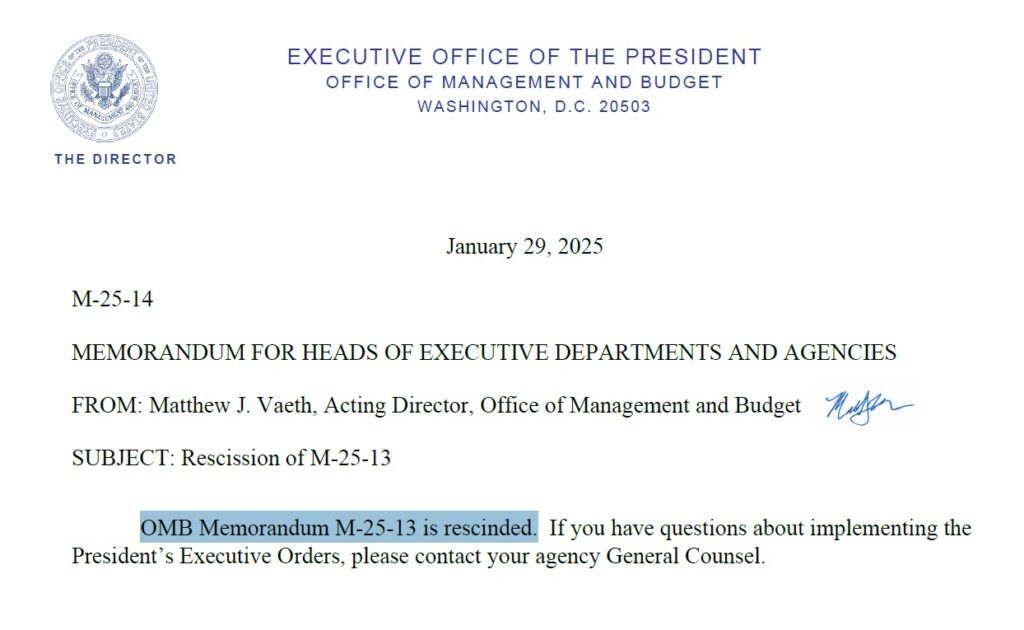
  2. Today, OMB Memorandum M-25-13 is rescinded. In fact, those are the exact words used in a short memo from OMB dated today. 
  3. While it is a positive development that the memo is rescinded, serious questions and concern remain about the risk to services critical to children and families that would disappear without federal funding. A full-scale review of federal grants and payments continues to proceed. CAA is collecting stories to shine a light on the impact in Arizona, and you can share the impact to you or your organization to help us to do this. 
  4. There are threats to vital services for children and families that existed before this week’s memos and that continue to loom. Drastic cuts to Medicaid (the Arizona Health Care Cost Containment System or AHCCCS) that are being discussed in Congress would take away health care from hundreds of thousands of Arizonans and destabilize our state’s health care system. Similarly, cuts to the State Nutrition Assistance Program(SNAP) would increase child hunger. These are preliminary proposals for now and CAA is working every day with partners to prevent them from gaining support. 

We will continue to work to keep you informed. Our collaboration with you and all of our partners is key to policy decisions that work for children and families – not against them.

Protect Federal Funds for Children and Families

Is this pause in federal funds impacting you, your organization, or children and families in Arizona? We are collecting stories to help shine a light on the potential impacts of loss of federal funds. Please consider sharing your story with us and collaborating to protect vital services for children and families.

The federal government, through the Office of Management and Budget (OMB), has directed agencies to review federal grants and financial assistance and to temporarily pause federal financial assistance. This means a sudden halt to the disbursement of federal funds to states, tribes, local governments, non-profit organizations, private sector partners, and more. 

This directive, in OMB Memo 25-13, causes great concern and uncertainty. 

A Pause in Federal Funds Will Hurt Arizona

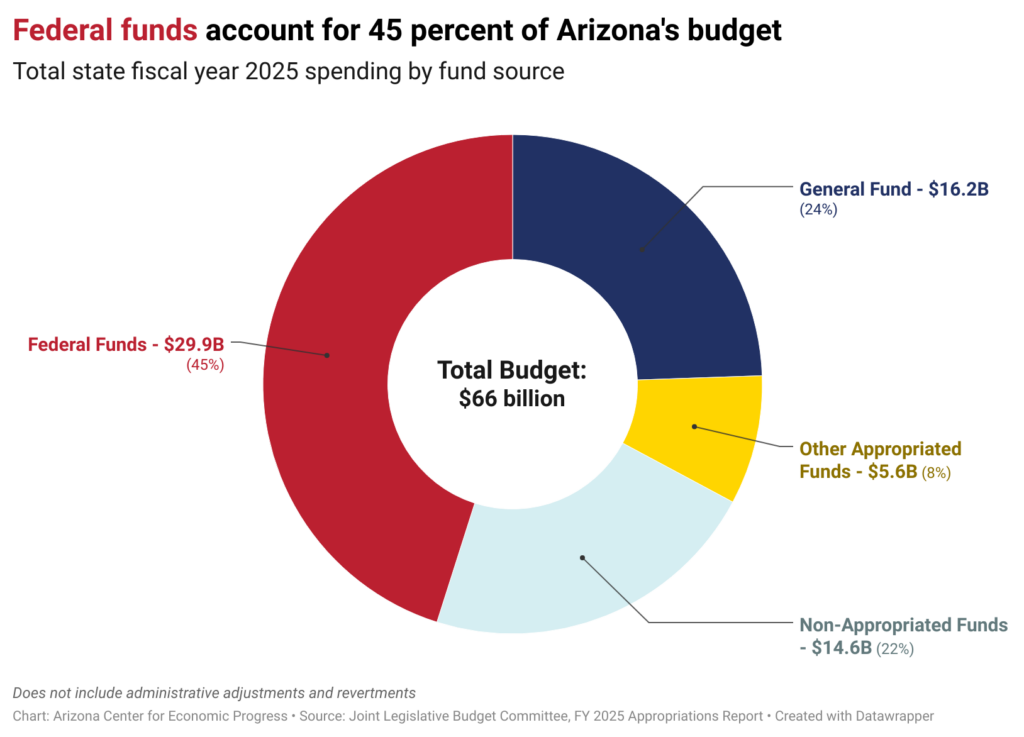
Arizona receives a significant amount of federal funds that are vital to the lives of Arizonans. In a 2024 state-by-state analysis of the percentage of state revenue from federal funds, Arizona was in the top ten states, ranked as the state with the third-highest share of federal funds. More recent recent data demonstrates that federal funds account for 45% of Arizona’s budget. This ranges from health care to highways to veteran’s care, child care, and services for seniors. Even a temporary pause in Arizona’s federal funds has the potential to cause harm.

Arizonans Rely on Lifesaving and Life-Changing Services Supported by Federal Funds

As the former Assistant Secretary of the Administration for Children and Families (ACF) at the U.S. Department of Health and Human Services (HHS), I know how much pain will be caused if federal investments are withheld. I know because I’ve met so many of the parents, children, and people who are impacted by what they often call “lifesaving” or “life-changing” services. At HHS, funds are disbursed for critical programming, including Medicaid and State Children’s Health Insurance Programs, substance use treatment, suicide prevention, pandemic preparedness, and much more. At ACF alone, federal funds historically support: Children in foster care, their kinship caregivers, and foster families; Child care services in every state and Head Start programs that parents and employers rely on; Services for victims of domestic violence and human trafficking; Housing and job assistance for teenagers as they exit the foster care system and young people in the runaway and homeless youth system; Utility assistance to help people keep their heat on in the cold and air conditioner in the summer; and Temporary assistance for needy families to help Americans get through tough times. Pulling the rug out from children, families, and the American people at the toughest times of their lives, and when they are already facing rising costs, will be especially painful. 

Need for Greater Clarity
Many questions remain about the scope of the directive to halt federal funds.

What is the universe of funding at risk under the directive? This requires clarity. The answer seems likely to hinge on the interpretations of federal administrators. The memo notes that the directive does not impact Social Security or Medicare payments or assistance provided directly to individuals. In addition to the memo, OMB also issued a Q&A guidance related to the memo. This Q&A states that Medicaid, Supplemental Nutrition Assistance Program (SNAP), and Head Start will continue without pause. These clarifying statements are important, especially as some federal funding payment systems have been inaccessible today. Furthermore, even with these clear exceptions, many consequential services and programs supported by federal funds remain at risk.

How Long Will Funds Be Paused? This is an open question. The memo directs federal agencies to report back to the White House based on their review by February 10. Courts and judicial actions will also have an impact on this as litigation proceeds. 

Is it Legal to Pause Congressionally Appropriated Funds? This question is already being litigated, and a court has quickly intervened to halt the effects of this directive until at least Monday. We often hear of Congress as having the “power of the purse” because the U.S. Constitution grants Congress the power to impose taxes and spend revenues. In addition, the Impoundment Control Act also created controls to prevent unilateral executive actions that delay or cancel funding passed by Congress. 

What’s Next? Children’s Action Alliance stands with our partners statewide who show up for children and families every day. We will share the potential impact of this and other federal actions with our congressional delegation and other Arizona leaders. All of us will continue to see news come out about new federal actions, litigation, and court decisions.

We will stay informed and share information so we can collectively take action to protect services for children and families. Join us in these efforts.

Is this pause in federal funds impacting you, your organization or children and families in Arizona? We are collecting stories to help shine a light on the potential impacts of loss of federal funds. Please consider sharing your story with us and collaborating to protect vital services for children and families.

Protecting Immigrant and Mixed Status Families

Children’s Action Alliance works to build an Arizona where all children and families thrive. When children and families must live in fear just to obtain an education in school, our policymakers are failing. 

On January 20, 2025, the federal government rescinded a policy that protected sensitive locations such as churches, schools, and hospitals from immigration enforcement.  The cruel elimination of this protection allows officials to conduct immigration enforcement operations in these spaces, causing fear even in what have been – and should remain – safe spaces.  

The policy's removal threatens the well-being and safety of immigrant children and families in Arizona. 

In preparation and response to these federal actions, families and allies can seek and share valuable resources, including the following: 

Children’s Action Alliance is committed to advocating for policies to protect children and their families. We stand opposed to the inhumane elimination of protected spaces where children and families should feel safe, the unconstitutional attack on birthright citizenship, and the devastating consequences these actions will have on children and their ability to thrive.  

We urge community members to stay informed and share resources for the protection of all children and families in Arizona.

Building the Future Together: Meet Our New Team Members!

We are thrilled to announce our newest team members: Jennifer J. Burns, Lori Goodspeed, and Nathan von Gnechten. 

Jennifer serves Children’s Action Alliance as our Director of Government Relations and Health Policy. Jennifer drives the health policy agenda and also provides leadership in our work with policymakers.

Lori joins Children’s Action Alliance as our new Youth and Family Advocacy Coordinator. In this role, Lori works to strengthen youth and family engagement, including kinship caregivers and youth who’ve experienced the foster care system.

Nathan serves as an Economic Policy Analyst at the Arizona Center for Economic Progress. In this role, Nathan provides research and analysis to advance budget and policy decisions that support the well-being of communities across Arizona.

We are excited to welcome these new team members to help carry out our mission to the children, families, and people of Arizona.

AHCCCS and KidsCare are Essential in Rural Arizona

Arizona Health Care Cost Containment System (AHCCCS), Arizona’s Medicaid program, and KidsCare, Arizona’s Children’s Health Insurance Program (CHIP), are key to the health of children and families. A  new report from the Georgetown University Center for Children and Families  makes this clear, especially the role that Medicaid and CHIP have in small towns and rural counties in Arizona.

The report reveals important regional trends regarding health insurance coverage. Children and adults in rural areas often have higher rates of being uninsured. According to the most recent U.S. Census data, rural areas like La Paz, Apache, Navajo, and Gila County had the highest percentages of children without health insurance in Arizona. This shows that public health insurance options are important to all Arizonans, and that is especially true in rural areas.

Read more about the importance of Medicaid and CHIP for children and adults in Arizona's small towns and rural counties in this new Georgetown University CCF report.

The 2025 Legislative Session

As we kick off 2025 and a new legislative session, it’s the perfect time to think about the kind of Arizona we all want – one where children and their families can keep a roof over their head, can stay well or get well through health insurance, have enough to eat, are safe, and have access to a strong education starting with affordable child care and early learning. What we know is the ability of families to meet these needs for children isn’t just essential to them, it’s essential to the future of Arizona. We can build that Arizona.

Today is opening day at the Arizona State Legislature as well as the State of the State address by Governor Hobbs. Many legislative bills are already filed, and both executive and legislative budget proposals will soon be unveiled. For 37 years, Children’s Action Alliance has been a staunch advocate and watchdog for children at the State Capitol. We enter 2025 with this same commitment. We will keep you informed of our policy priorities and of policy and budget proposals that hurt or help children and families. We hope your commitment is to make your voice heard alongside us.

Together, we can bring change that supports the safety and success of children in Arizona.

Click here to view a snapshot of our 2025 Legislative Agenda.

Our 2025 Legislative Priorities

Children’s Action Alliance (CAA) is committed to making Arizona a state where all children and families thrive.

Our 2025 Legislative Agenda focuses on:

  • Health Care: Protect access to AHCCCS and KidsCare and preventative health services
  • Child Care: Growing access to affordable, high-quality child care and early learning
  • Family Supports: Economic supports to prevent family crisis
  • Foster Care: Less children in congregate care and more support for youth transitioning out of foster care and for kinship caregivers who step in to provide care for children when they need it most

Click here to learn more about CAA's priorities to create an Arizona where all children and families thrive.